- within Criminal Law, Immigration and Cannabis & Hemp topic(s)
Commercial real estate is kicking off the year with renewed energy.
Several sectors are showing signs of resilience and growth — from data centers to offices and luxury retail. As moderating inflation and stabilizing financial conditions lift investor confidence, a broader recovery in commercial real estate is likely around the corner.
On March 4, 2026, Goodwin and Columbia Business School will co-host theReal Estate Capital Markets (RECM) Conferencewhere real estate leaders will share perspectives on the trends shaping the market's path forward.
Here are some of the themes we're focused on as we prepare for the conference.
Data Centers Reshape Real Estate Investment
Investor demand for data centers has surged due to the rapid growth of artificial intelligence (AI) and cloud computing.
Publicly traded real estate investment trusts (REITs) are snapping up data centers faster than any other property type, according to Nareit (the National Association of Real Estate Investment Trusts). Meanwhile, 95% of investors globally — including private equity firms and private funds — plan to increase spending on data centers, a CBRE survey found.
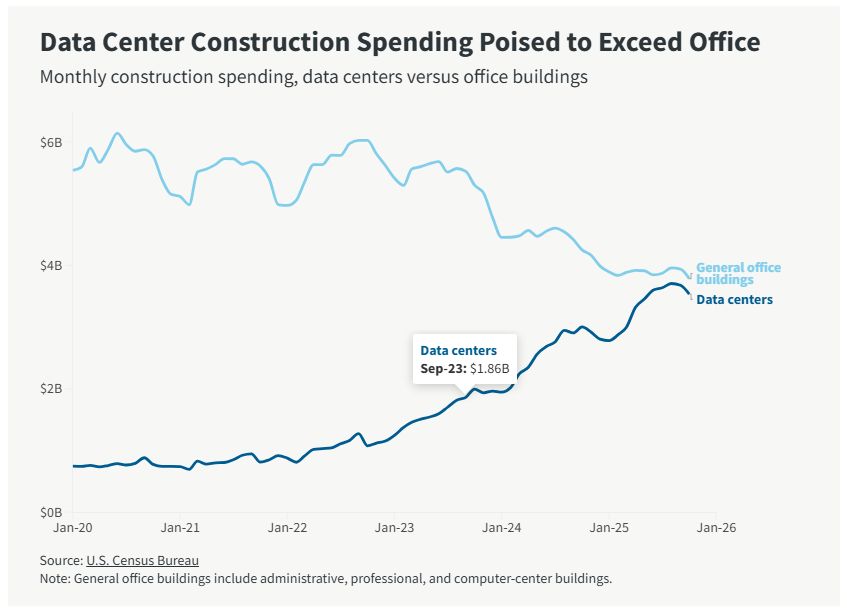
As a result of the AI boom, real estate is now more closely linked to the tech sector than ever before. That exposure is increasingly visible in development activity: Construction spending on data centers is now poised to surpass general office-building construction as soon as this year, according to data from the U.S. Census Bureau.
Office Demand Shows Signs of a Turnaround
Rising office attendance is underpinning the early stages of a reversal in office markets following the COVID-19-driven downturn. In 2025, nearly 60% of Fortune 100 employees were required to be in the office full time, compared with 7% in 2023, real estate firm JLL found.
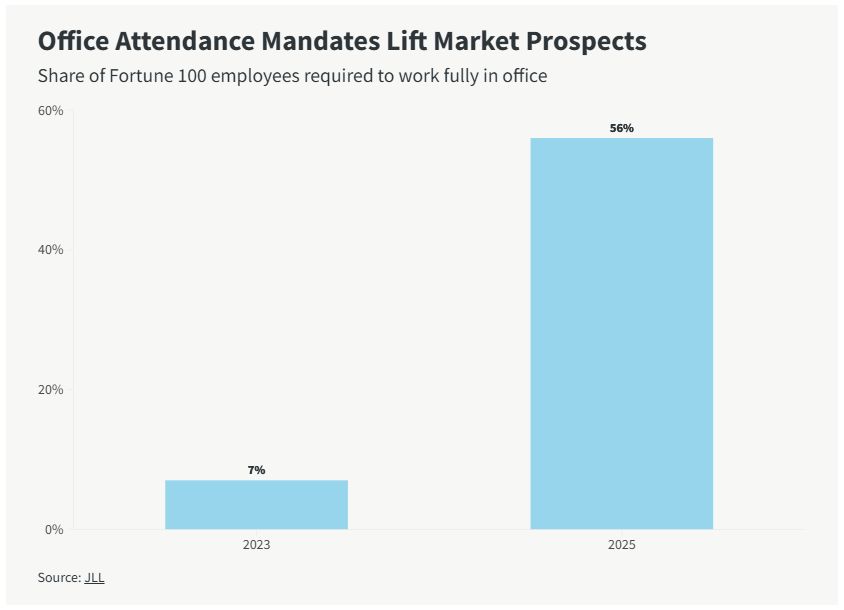
The return-to-office mandates will likely contribute to a decline in the US office vacancy rate, which stands at roughly 20%. Office leasing activity has already picked up, with 2024 and 2025 seeing the highest leasing volumes of the post-COVID-19 period in many US markets, according to real estate services firm Colliers.
Office demand appears to be spreading across cities. In 2025, 50 US markets recorded positive annual absorption, a notable increase from 33 markets a year earlier, commercial real estate services company Cushman & Wakefield said.
Luxury Retail Rides the Upside of a K-Shaped Economy
Luxury retail continues to outperform in an economy in which higher-income consumers prove notably resilient. Newly opened luxury retail square footage surged 65% in the first half of 2025 compared with the same period a year earlier, according to JLL.
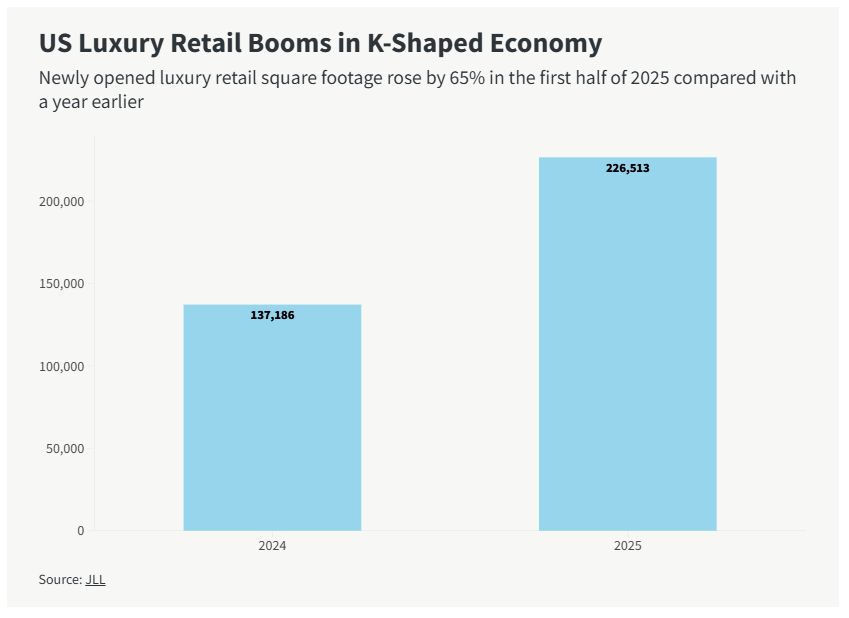
Street retail continues to be the preferred format, with more than half of new luxury stores opening on streets rather than in malls.
The strength of luxury retail is consistent with recent Bank of America Institute findings showing that higher-income consumers increased spending faster than lower-income consumers in the second half of 2025.
E-Commerce Strength Anchors Industrial Sector
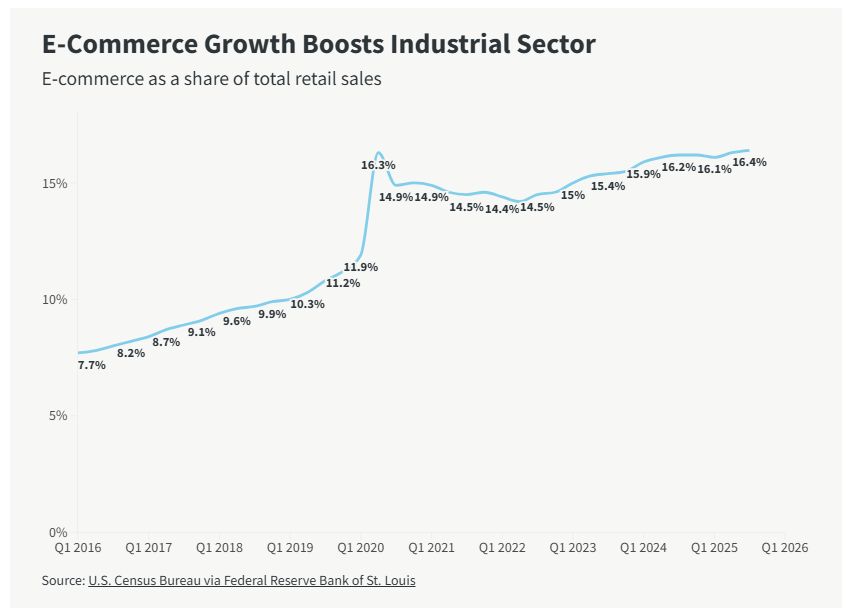
The industrial sector has remained resilient despite tariffs that injected uncertainty into global supply chains. Continued growth in online sales is supporting demand for warehouses and fulfillment centers.
E-commerce now accounts for 16% of all retail sales, up from 11% in 2019. The strength of online retail is likely to continue supporting the industrial sector: Most markets tracked by Cushman & Wakefield expect e-commerce to be the top driver of industrial leasing demand over the next three years.
Investor Appetite for Commercial Real Estate Rebounds
The foundation is in place for increased investment activity, supported by large amounts of dry powder and a rebound in fundraising.
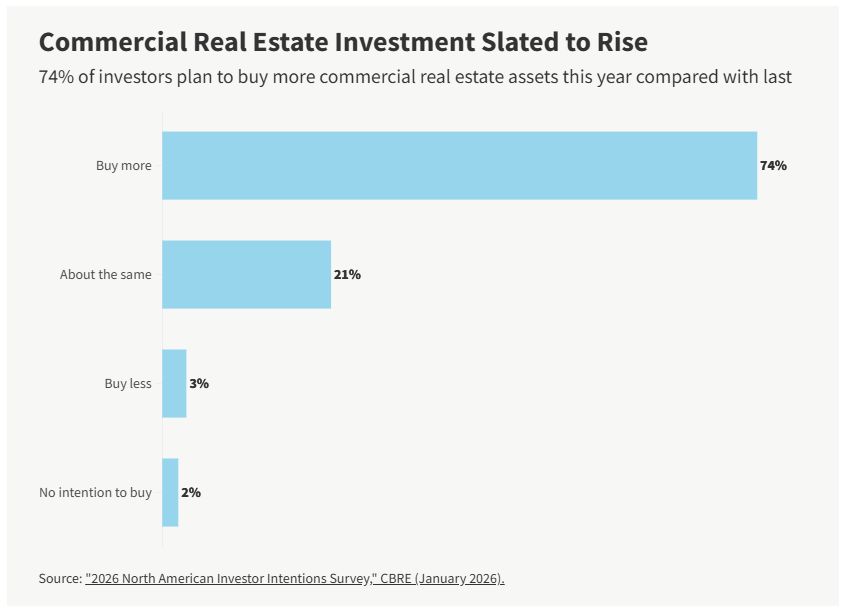
Indeed, investor sentiment is strengthening, with a CBRE survey showing that 74% of investors plan to buy more commercial real estate assets than they did last year.
Private investors remain the most active buyers, while REITs and institutional investors are also reentering the market.
The content of this article is intended to provide a general guide to the subject matter. Specialist advice should be sought about your specific circumstances.