

ASIC's Report 820 sets out findings from its surveillance of 28 private credit funds - both retail and wholesale - which it conducted between October 2024 and August 2025. ASIC's surveillance included on-site visits, requests for documentation and data in relation to governance, risk management, valuations and distribution information.
ASIC's Report identified a number of areas of poor or inconsistent practice which fund managers in the private credit space. AFSL holder should use these as an indication of further regulatory enquiry and enforcement action from ASIC in the coming year.
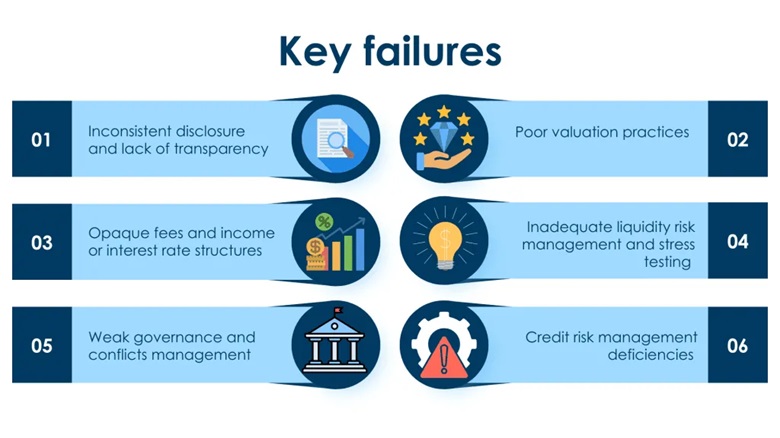
The report flags widespread weaknesses across many funds. The key issues ASIC identified include:
- Disclosure and transparency failures - ASIC found that there were significant inconsistencies in the approach of fund managers in informing investors about the fund. For example, many funds report very low default rates, but that there was a lack of consistency in what actually constitutes a default. ASIC's concerns relate to the ability for investors to compare the benefits and risks of various credit funds. Key terms, fund strategies and underlying assets should all be described and disclosed clearly to investors.
- Opaque fee and income or interest rate structures - ASIC's concern relates to the lack of clear and quantified information in relation to manager remuneration, including fees, net interest margin retained and borrower-paid fees. ASIC's expectation is that fee and income structure be fair and transparent, and that a clear view of total costs is given to the investor.
- Weak governance and conflicts of interest management - ASIC's review found that there were several funds where the trustee had minimal oversight of fund transactions and actions taken by the investment manager. In relation to conflicts of interest, ASIC observed that whilst governance procedures existed in relation to the management of conflicts and related party transactions, there was a failure in some funds to implement and actively follow these procedures. ASIC's expectation is that trustees will actively communicate with investment managers, and ensure that conflicts of interest are disclosed and managed appropriately. All procedures to manage conflicts of interest, including any disclosures to investors or approvals required should be clearly documented.
- Poor valuation practices - valuations are key in private credit funds, as they determine transaction, entry and exit prices and can influence fees. Importantly, ASIC observed that a number of private credit funds subject to the review had either no valuation policies in place or the policies were inadequate. ASIC also noted that opaque valuations practices prevented investors from assessing whether the fund had reliable controls to mitigate the risk of inadequate valuations. ASIC's expectation is that valuations will occur regularly, based on the specific fund and its underlying assets, and that policies in relation to valuations are transparent and communicated to investors within disclosure documents.
- Inadequate liquidity risk management and stress testing - given private credit funds typically invest in illiquid assets, ASIC noted the importance of good liquidity risk management and disclosure, to ensure fund operations and strategies aligned with investor expectations. ASIC reports that there was a lack of stress testing undertaken by a significant number of the funds which were the subject of the review. The report states that ASIC's expectation of better practice is for funds to conduct frequent stress testing, to promote confidence in the fund.
- Credit risk management deficiencies - given that private credit funds lend to borrowers with higher risk profiles, credit risk management is particularly important for fund managers in this space. ASIC expects there to be clear policies on impairment recognition, detailed credit assessments, enhanced due diligence for certain loans, and ongoing monitoring. Proactive portfolio monitoring and transparent reporting of defaults to investors were also cited by ASIC as important considerations for fund managers.
ASIC's report also includes a table of principles for private credit done well. A summary of the table is below.
Stewardship - trustees are stewards of investor capital, and must make decisions in investors' best interests with fairness and accountability to safeguard assets and promote fairness. Trustees should actively oversee fund operations, including valuations, conflicts, liquidity and defaults.
Organisational capability - adequate human, financial and technological resources must be maintained. Trustees have an obligation to provide financial services efficiently, honestly and fairly - this includes ensuring staff have the adequate expertise and experience and undertaking monitoring and supervision of staff, including corporate authorised representatives.
Transparency - investors should have access to timely and transparent information on investment strategy, exposures, valuations, risks and fees.
Design and distribution - design and distribution practices should be fair and transparent, meaning trustees must determine an appropriate target market and ensure it reflects any high-risk or complex fund structures.
Fees and costs - fees and costs must be fair and transparent and enable investors to make informed decisions.
Conflicts of interest - conflicts should be identified, disclosed and managed. If they cannot be managed, conflicts must be avoided. Disclosure should be clear and transparent and action taken to manage a conflict must be clearly documented.
Governance - credit funds should be governed by well-established governance procedures, including clearly defined roles, reporting lines and responsibilities. Funds should have independent oversight from trustees which are independent from the business.
Valuations - valuations must be fair, timely and transparent and valuation methodology should be disclosed to investors.
Liquidity - liquidity risk must be managed effectively and disclosed to investors to ensure redemption terms align with portfolio liquidity. Redemption terms, liquidity gates and stress testing procedures should be disclosed clearly to ensure investors understand the relevant risks.
Credit risk - loan origination, portfolio construction, monitoring and impairment, default and repayment must all be considered and a framework implemented to ensure credit risk is appropriately managed.
If you have questions about ASIC's Report 820, please contact us.
Further Reading
ASIC Report 820: Private credit surveillance: retail and wholesale funds
ASIC Media Release: A roadmap for capital markets to grow our economy
The content of this article is intended to provide a general guide to the subject matter. Specialist advice should be sought about your specific circumstances.
[View Source]