

Taylor Swift is no stranger to protecting her name. So when a company sought to trademark "Swift Home," her legal team moved quickly. What followed was a short-lived dispute that sheds light on how trademark law balances ordinary language with powerful personal brands.
What happened?
Cathay Home, a business that sells home goods through major retailers, applied in 2025 to register "Swift Home" as atrademark for bedding products. Earlier this month, Swift's team filed anobjectionwith the United States Patent and Trademark Office (USPTO), asking officials to block the application.
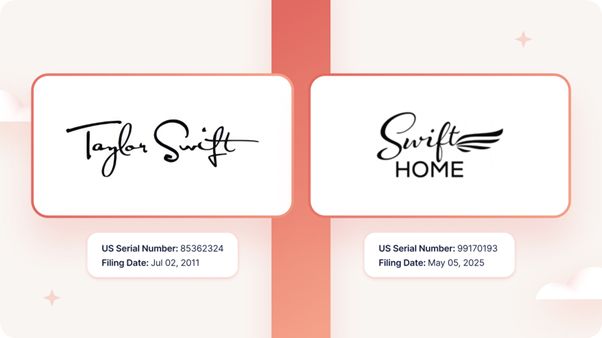
Her lawyers argued that the way the word "Swift" was written in the company's branding closely resembled her owntrademarked cursive logo. They said this could mislead shoppers into thinking the bedding was connected to, or endorsed by, the singer.
Over the weekend, Cathay Home withdrew its application. A company representative described the mark as not "essential to its business," and its lawyer said the decision was commercially sensible.
Although this case was resolved rather quickly, it offers a useful look at how trademark law works in real life.
You can't "own" a word
Let's start by clarifying the biggest misconception: Trademark law does not let someone lock up a word and prevent everyone else from using it.
"Swift" is a common English adjective meaning "fast". It's also a surname shared by many people. In general, businesses are allowed to use ordinary words (even if those words are also someone's name), as long as they are not misleading consumers.
So Taylor Swift cannot stop every company in America from using the word "swift." A courier service advertising "swift delivery" would almost certainly be fine. A brand called "Swift Plumbing" in a small local market might also be fine.
Trademark law isn't about language ownership. It's about preventing consumer confusion andtrademark infringement.
The key question: would consumers be confused?
When someone challenges a trademark application, the main legal test is called "likelihood of confusion." That's just a formal way of asking: would ordinary buyers reasonably think the two brands are connected?
Trademark offices look at several factors, including:
- How similar the two names look and sound
- Whether the products are related
- How strong or well-known the earlier brand is
In this case, Swift's team focused heavily on the logo. They argued that the stylized, cursive way "Swift" appeared in "Swift Home" closely resembled her own distinctive script logo.
The scope of trademark protection
Trademarks don't only protect plain words. They can also protect specific designs, fonts and stylized versions of names.
If Cathay Home had used "Swift Home" in a basic, neutral font, the argument might have been weaker. But when a company uses lettering that looks very similar to a celebrity's signature branding, it can change the overall impression.
Trademark law looks at the "total commercial impression" of a brand. In other words, what feeling or association does it create in the mind of a typical shopper?
Taylor Swift is more than just a musician. She is a massive global brand who has licensed her name across clothing, accessories and other merchandise. According to public records, she holds hundreds of trademarks covering her name, initials, album titles and more, including incategories such as bedding.
So if consumers saw "Swift Home" bedding in a store, written in a script that resembles her signature logo, it's not far-fetched to think some might assume a connection. And that is exactly what trademark law is designed to prevent.
The content of this article is intended to provide a general guide to the subject matter. Specialist advice should be sought about your specific circumstances.
