

- within Energy and Natural Resources topic(s)
- within Litigation, Mediation & Arbitration and Technology topic(s)
Richard E. Engler, Ph.D., To Speak On TSCA New Chemicals At GlobalChem 2026
Richard E. Engler, Ph.D., Director of Chemistry, Bergeson & Campbell, P.C. (B&C®), will be joined by Shari Barash, Director of the New Chemicals Division, Office of Pollution Prevention and Toxics (OPPT), U.S. Environmental Protection Agency (EPA), and Caroline Tuckhorn, Associate Director, Chemical Management, American Chemistry Council (ACC), topresent "TSCA New Chemicals: Trends, Challenges, and Opportunities" on February 23, 2026. B&C is proud to be a co-sponsor of the 2026 GlobalChem Conference. This three-day event, occurring February 22-24, 2026, in Washington D.C., offers authoritative speakers, in-depth sessions, and a chance to meet and reconnect with industry peers and key government representatives. We hope to see you there, and at our booth in the exhibit hall. For more information and to register, visit the GlobalChem 2026 website.
TSCA/FIFRA/TRI
EPA Releases Draft Pesticide Registration Notice 2026-NEW: Notifications, Non-Notifications, And Minor Formulation Amendments
On January 5, 2026, EPA released its draft Pesticide Registration (PR) Notice, entitled "Pesticide Registration Notice 2026-NEW: Notifications, Non-Notifications, and Minor Formulation Amendments" (Draft PRN 2026-NEW), and announced a 45-day public comment period. 91 Fed. Reg. 271. Since the January 5, 2026, announcement, an extension to the comment period has been published. 91 Fed. Reg. 6217. In the Draft PRN 2026-NEW, EPA provides proposed guidance to pesticide registrants submitting minor modifications to registrations having no potential to cause unreasonable adverse effects on the environment and that do not require extensive EPA review. See our January 8, 2026, blog item regarding the initial announcement of PRN 2026-NEW. More information is available in our January 30, 2026, memorandum. Comments are due on or before March 23, 2026.
TSCA Section 21 Petition Seeks Risk Management Rule For Chemicals "Widely Used" In Consumer Liquid Laundry Detergents
According to the EPA website, EPA received a petition on January 6, 2026, under Section 21 of the Toxic Substances Control Act (TSCA) regarding certain chemicals in consumer laundry detergents. The petition requests that EPA initiate a TSCA Section 6(a) rulemaking regarding the following chemical substances that are "widely used in consumer liquid laundry detergents":
- Sodium C10-16 alkylbenzenesulfonate;
- Sodium laureth sulfate (SLES); and
- 1,4-Dioxane (present as a manufacturing impurity).
According to the petition, the chemical substances "present an unreasonable risk under their specific 'conditions of use' (i.e., residue remaining on clothing)." The petition notes that EPA's 2020 risk evaluation for 1,4-dioxane identified unreasonable risks to health and that 1,4-dioxane is a byproduct of the ethoxylation process used to create SLES in detergents. The petition states that "[c]urrent regulations allow its hidden presence, exposing the public to chronic carcinogenic risks via dermal contact." The petition also cites recent consumer reports indicating that "High Efficiency" washing machines "often fail to rinse these chemicals from fabrics, creating a continuous dermal exposure pathway that is not addressed by current labeling." The petition requests that EPA issue a rule under TSCA Section 6(a) determining that the ongoing use of these chemical substances in consumer laundry detergents presents an unreasonable risk of injury to human health. The petition also seeks mandatory warning labels stating that "Concentrated residues of this product are known skin irritants" and mandatory disclosure on the product label when 1,4-dioxane is detectable above 0.1 parts per million (ppm) "due to its classification as a probable human carcinogen." Under TSCA Section 21, EPA has 90 days from the date of receipt to grant or deny the petition.
EPA Announces EPA Will Get "Back On Track" To Eliminate Animal Testing By 2035
EPA Administrator Lee Zeldin announced on January 22, 2026, that the Agency was getting "back on track with reducing mammalian animal testing and recommitting to the ambitious goal laid out during the first Trump Administration to eliminate the practice by 2035." According to EPA, the Office of Chemical Safety and Pollution Prevention (OCSPP) is committed to using a three-pronged strategy to ensure the Agency stays on track with phasing out animal testing and meeting the 2035 goal:
- Identify New Approach Methods (NAM) that can currently be used as an alternative to traditional animal testing;
- Conduct a comprehensive review of agency guidance and the Code of Federal Regulations to provide flexibility in fulfilling data requirements for toxicity assessments and issuing waivers to further reduce animal testing requirements; and
- Encourage external researchers and data providers to use NAMs and apply for animal testing waivers whenever possible.
EPA Proposes To Update Voluntary Consensus Standards In Formaldehyde Emission Standards For Composite Wood Products
EPA proposed on February 11, 2026, to update the incorporation by reference of several voluntary consensus standards in the Agency's formaldehyde standards for composite wood products regulations under TSCA due to the standards having been updated or superseded by the issuing organizations. 91 Fed. Reg. 6161. According to EPA, the new standards primarily update test methods and product standards concerning composite wood products that use formaldehyde. EPA also proposes to conform the updated standards in the scope and definitional sections in the final rule and to incorporate by reference a new small scale quality control chamber test method, similar to current methods already incorporated by reference. Comments are due March 13, 2026.
RCRA/CERCLA/CWA/CAA/PHMSA/SDWA
Appellate Court Denies EPA's Request To Vacate SDWA Limits For Four PFAS
The U.S. Court of Appeals for the District of Columbia Circuit issued a January 21, 2026, order denying EPA's motion for partial vacatur of its April 2024 National Primary Drinking Water Regulation (NPDWR) for six per- and polyfluoroalkyl substances (PFAS). American Water Works Association (AWWA) v. EPA (No. 24-1188). EPA announced on May 14, 2025, that it would keep the current NPDWR for perfluorooctanoic acid (PFOA) and perfluorooctane sulfonic acid (PFOS) and that it intended to rescind the regulations and reconsider the regulatory determinations for perfluorohexane sulfonic acid (PFHxS), perfluorononanoic acid (PFNA), and hexafluoropropylene oxide dimer acid (HFPO-DA or GenX), and the Hazard Index mixture of these three plus perfluorobutane sulfonic acid (PFBS) "to ensure that the determinations and any resulting drinking water regulation follow the legal process laid out in the Safe Drinking Water Act [SDWA]." EPA filed a brief on December 3, 2025, asking that a motions panel vacate the NPDWR for the four PFAS. The petitioners sought a merits panel ruling on the motion, however. The January 21, 2026, order states that "[t]he merits of the parties' positions are not so clear as to warrant summary action." More information on the April 2024 final rule is available in our May 9, 2024, memorandum.
EPA Releases Fluoride Preliminary Assessment Plan And Literature Survey For Public Comment
On January 28, 2026, as the first step in developing the Fluoride Human Health Toxicity Assessment (toxicity assessment), EPA released the Fluoride Preliminary Assessment Plan and Literature Survey (Assessment Plan) for public comment to provide transparency and gather early feedback. 91 Fed. Reg. 3722. According to EPA, the objectives of the Assessment Plan are to describe the approach EPA intends to follow to develop the fluoride toxicity assessment and present the results of the preliminary literature survey. EPA notes that the Assessment Plan is not a toxicity assessment; it does not contain conclusions regarding harmful human health effects of fluoride or determine the level of fluoride exposure at or above which is associated with harmful health effects. Such conclusions about fluoride human health effects will be released as part of the forthcoming draft human health toxicity assessment. EPA's toxicity assessment will be used to inform future decisions about potential revisions to the existing fluoride drinking water standard under the SDWA. Comments are due February 27, 2026.
PHMSA Seeks Feedback On ANPRM To Modernize HMR To Facilitate Transportation Of Hazardous Materials Integral To Spacecraft Components And Payloads
The Pipeline and Hazardous Materials Safety Administration (PHMSA) published an advance notice of proposed rulemaking (ANPRM) on January 29, 2026, to solicit stakeholder input on opportunities to amend requirements in the Hazardous Materials Regulations (HMR) for spacecraft (e.g., launch vehicles, reentry vehicles) and space operations that require the transportation of hazardous materials integral to spacecraft payloads or components (i.e., transporting satellites, capsules, and related equipment to and from launch and recovery sites by all transportation modes, but most often by highway or vessel). 91 Fed. Reg. 3860. PHMSA notes that to account for the complexities of space operations, it has issued special permits to government and private entities, providing variances from the requirements of the HMR to facilitate the domestic transportation of hazardous materials in commerce in support of space operations. PHMSA requests public input to determine what existing standards and best practices are used in the space sector to ensure the safety of these hazmat shipments, and what regulations may be unnecessary when operating under these standards and best practices. According to PHMSA, "[t]his will improve government efficiency and provide regulatory certainty for the regulated community by reducing the need to issue special permits and addressing cases in which the regulations do not prescribe specific provisions." Comments are due April 29, 2026. PHMSA will consider late-filed comments to the extent possible, however.
EPA Requests Nominations For e-Manifest Advisory Board
On February 6, 2026, EPA requested the public to nominate experts in Information Technology (IT) to be considered for a three-year membership appointment to the Hazardous Waste Electronic Manifest System (e-Manifest) Advisory Board. 91 Fed. Reg. 5472. Pursuant to the e-Manifest Establishment Act, EPA established the Board to provide practical and independent advice, consultation, and recommendations on the activities, functions, policies, and regulations associated with the e-Manifest System. In accordance with the Act, the EPA Administrator or designee will serve as Chair of the Board. EPA may also consider nominations received through this solicitation to fill any unanticipated future vacancies on the Board for the following positions including an industry representative member with experience in using or representing users of the manifest system and a state representative member responsible for processing manifests. Nominations of candidates considered for appointment are due March 9, 2026.
EPA Requests Public Input On Charge Questions To e-Manifest Advisory Board And On Potential Topics For e-Manifest System Industry Users Conference
On February 6, 2026, EPA invited the public to provide input for potential charge questions and/or charge question topics that EPA could consider when consulting the e-Manifest Advisory Board regarding the operations of EPA's e-Manifest. 91 Fed. Reg. 5473. According to EPA, relevant topics could include matters related to the operational activities, functions, policies, and regulations of EPA under the e-Manifest Act. EPA is also inviting the public to provide input on topics for an EPA sponsored e-Manifest Industry Users Conference. Advisory Board charge question and/or charge question topics recommendations and e-Manifest users conference topics recommendations comments are due March 9, 2026.
PHMSA Proposes HMR Amendments To Harmonize With International Standards
PHMSA proposed on February 10, 2026, to amend the HMR to adopt certain international regulations and standards related to proper shipping names, hazard classes, packing groups, special provisions, packaging authorizations, air transport quantity limitations, and vessel stowage requirements. 91 Fed. Reg. 5996. PHMSA states that these amendments are intended to maintain consistency with the latest international standards and regulations, and to reduce costs to entities or individuals within the United States or to otherwise lower the cost of regulations on the U.S. economy. Comments are due April 13, 2026. PHMSA states that to the extent possible, it will consider late-filed comments while developing a final rule.
EPA Rescinds GHG Endangerment Finding And Motor Vehicle GHG Emission Standards Under The CAA
EPA released a final rule on February 12, 2026, that will rescind the 2009 Greenhouse Gas (GHG) Endangerment Finding that served as a prerequisite for regulating emissions from new motor vehicles and new motor vehicle engines. EPA states that absent this finding, it lacks statutory authority under Section 202(a) of the Clean Air Act (CAA) to prescribe standards for GHG emissions. Therefore, EPA will also repeal all subsequent GHG emission standards from its regulations for light-, medium-, and heavy-duty on-highway vehicles and engines. According to EPA, "[t]his is the single largest deregulatory action in U.S. history and will save Americans over $1.3 trillion." EPA notes that as a result of these changes, engine and vehicle manufacturers no longer have any future obligations for the measurement, control, and reporting of GHG emissions for any highway engine and vehicle, including model years manufactured prior to the final rule. The final rule is related only to GHG emissions and does not affect regulations on any traditional air pollutants. Rather, according to EPA, "this action realigns EPA's regulatory framework with the best reading of the CAA, which does not authorize EPA to regulate GHG emissions from new motor vehicles." The final rule will take effect 60 days after publication in the Federal Register.
FDA
FDA To Hold Food Allergen Threshold Meeting
On January 21, 2026, the U.S. Food and Drug Administration (FDA) announced that it will convene a virtual public meeting entitled "Food Allergen Thresholds and Their Potential Applications" on February 18, 2026, followed by listening sessions on February 19-20, 2026. FDA is hosting events with industry representatives, consumer groups, healthcare professionals, individual firms, retailers, and academic researchers to "help inform the FDA's next steps, prioritize potential options, and advance our food allergen threshold approaches to benefit public health." Registration details and event materials are available online. Registration for the February 18, 2026, public meeting will remain open until the meeting begins. Beginning on February 18, 2026, a Regulations.gov docket will open for comments related to the event topic. Electronic comments must be submitted on or before May 19, 2026. FDA will review input received at the public meeting, in the listening sessions, and in response to the Regulations.gov docket to determine next steps.
FDA Releases 2026 Deliverables For Human Foods Program
On January 23, 2026, FDA released its priority deliverables for 2026 for its Human Foods Program (HFP) that include a focus on food chemical safety, nutrition, and microbiological food safety. Deliverables under food chemical safety include:
- Generally Recognized As Safe (GRAS) Reform: FDA specifically states that "[i]n 2026, FDA will publish a proposed regulation to require the submission to FDA of GRAS notices for all new substances claimed to be GRAS."
- Post-market Safety Reviews of Marketed Food Chemicals: FDA intends to start with safety reviews of "phthalates, propylparaben, butylated hydroxyanisole (BHA), and butylated hydroxytoluene (BHT), among others." In a separate news release on February 10, 2026, FDA announced the launch of a comprehensive re-assessment of BHA.
- Microplastics: FDA's HFP intends to "carry-out research to identify methods that accurately and reproducibly detect, quantify, and characterize microplastics in human food."
- Adoption of Natural Color Additives: FDA is prioritizing a shift from petroleum-based food dyes to natural alternatives and intends to publish draft guidance on when fruit- and vegetable-derived juices qualify as color additives under FDA regulations.
- Consumer Exposure to Contaminants in Food: HFP intends to continue to study exposure to certain heavy metals, PFAS, and other contaminants in food.
FDA Releases New Total Diet Study Tool
On January 27, 2026, FDA announced the release of the Total Diet Study Interface (TDSi). TDSi is a tool for accessing data from FDA's Total Diet Study. FDA views the TDSi tool as "a significant advancement in data accessibility and transparency" that offers data visualization, enhanced transparency, increased scope, and ongoing updates.
FDA Releases New Seal
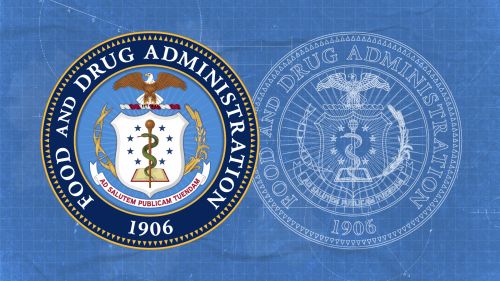
On January 28, 2026, FDA unveiled its first ever official agency seal, in honor of marking FDA's 120th year of service. The seal incorporates, among other features, a snake-entwined staff symbolizing medicine, a badge signifying enforcement and protection, and an eagle representing FDA's sweeping mission of protecting public health. Additional information is available at the link here.
FDA Takes New Approach To "No Artificial Colors" Claims
On February 5, 2026, FDA announced that companies will now have the flexibility to claim that products contain "no artificial colors" when the products do not contain petroleum-based colors. FDA released a public letter addressed to the food industry stating "FDA does not intend to take enforcement action as to section 403(a)(1) of the FD&C Act against a firm that makes certain voluntary labeling claims on foods intended for human consumption that do not contain any FD&C Act certified colors." FDA states that the current definition of artificial color, which does not differentiate between colors derived from natural sources and other color (e.g., from petroleum sources), "may create challenges to transitioning away from FD&C Act certified colors."
NANOTECHNOLOGY
NSF Will Establish National Quantum And Nanotechnology Research Infrastructure; Letters Of Intent Are Due March 16, 2026
The U.S. National Science Foundation (NSF) announced on February 13, 2026, that it is investing up to $100 million to establish a nationwide network of open-access research facilities for quantum and nanoscale technologies, innovation, and workforce training. According to NSF, the NSF National Quantum and Nanotechnology Infrastructure (NSF NQNI) program will support up to 16 sites over five years, providing students, researchers, and industry with access to state-of-the-art fabrication and characterization tools, instrumentation, and expertise. Together, the sites will form a shared national resource serving regional innovation ecosystems, including community colleges and small businesses. NSF states that the NSF NQNI will accelerate U.S. leadership in quantum information science and engineering, nanotechnology, semiconductors, biotechnology, advanced manufacturing, and other emerging technologies. NSF notes that letters of intent are required and are due March 16, 2026.
BIOBASED/RENEWABLE PRODUCTS/SUSTAINABILITY
B&C® Biobased And Sustainable Chemicals Blog
For access to a summary of key legislative, regulatory, and business developments in biobased chemicals, biofuels, and industrial biotechnology, go to https://www.lawbc.com/brand/bioblog/.
PUBLIC POLICY AND REGULATION
Public Policy And Regulation Blog®
Our insights on policy developments affecting industrial and agricultural chemicals and the products in which they are included are available at https://www.lawbc.com/brand/publicpolicyblog/.
LEGISLATIVE
House Subcommittee Holds Hearing On Legislation To Modernize TSCA
The House Committee on Energy and Commerce held a hearing on January 22, 2026, on "Chemicals in Commerce: Legislative Proposal to Modernize America's Chemical Safety Law, Strengthen Critical Supply Chains, and Grow Domestic Manufacturing." The hearing focused on a draft bill titled Discussion Draft of Legislation to Modernize the Toxic Substances Control Act (Discussion Draft). The Discussion Draft would impose sweeping changes to many of the key sections of TSCA, including those pertaining to definitions, testing authorities, review of new chemicals, review and management of existing chemicals, TSCA Inventory nomenclature, relationship to other federal laws, citizens' petitions, TSCA fees, and more. For a summary of the hearing testimony, please read our January 27, 2026, memorandum.
House Bill Would Establish Interagency GRAS Review Board To Review Legacy Determinations
Representative Michael Lawler (R-NY) introduced a bill (H.R. 7291) on January 30, 2026, that would "restore federal oversight of food ingredients that manufacturers unilaterally deemed 'Generally Recognized as Safe' (GRAS) decades ago, often without ever notifying" FDA. According to Lawler's February 3, 2026, press release, the legislation would establish an interagency GRAS Review Board, led by the U.S. Department of Health and Human Services and FDA, with participation from the U.S. Department of Agriculture (USDA) and EPA, to conduct scientific reviews of these legacy determinations. The press release states that "[u]nder current law, companies have been able to self-determine that certain substances are GRAS without FDA review or notification." The bill "focuses narrowly on pre-2000 GRAS determinations that were never submitted to the FDA, ensuring they meet modern scientific standards."
House Bill Would Amend TSCA To Prohibit The Use Of Hydrogen Fluoride At Petroleum Refineries
On February 4, 2026, Representative Maxine Waters (D-CA) introduced the Preventing Mass Casualties from Release of Hydrofluoric Acid at Refineries Act of 2026 (H.R. 7384). The bill would amend TSCA to prohibit the use of hydrogen fluoride (hydrofluoric acid) to refine petroleum at a petroleum refinery that begins operating on or after the date of enactment of the amendment. Beginning on the date that is five years after the date of enactment of the amendment, no person may use hydrogen fluoride (hydrofluoric acid) to refine petroleum at a petroleum refinery that began operating before the date of enactment of the amendment. As reported in our May 14, 2025, blog item, EPA denied a TSCA Section 21 petition seeking a prohibition of the use of hydrogen fluoride in domestic oil refining.
The Coalition For Chemical Innovations Offers Four Principles To Guide Congress's Efforts To Modernize TSCA
As reported in our January 27, 2026, memorandum, the House Energy and Commerce Subcommittee on Environment held a legislative hearing on January 22, 2026, focused on a draft bill entitled Discussion Draft of Legislation to Modernize the Toxic Substances Control Act. On February 9, 2026, the Coalition for Chemical Innovations (CCI) offered four principles to guide Congress's efforts to modernize TSCA. CCI notes that EPA's implementation of the 2016 amendments to the review process for new chemicals "have unnecessarily strained supply chains and domestic manufacturing, and inhibited the American ingenuity that keeps our economy strong and our communities safer." To help guide Congress's ongoing deliberations, CCI offers the following principles:
- Sustained and Adequate EPA Resources: EPA must be provided with sustained and adequate levels of funding to implement TSCA effectively, including a reauthorization of TSCA fee collection authority and baseline minimum appropriations commensurate with EPA's significant responsibilities under TSCA;
- Adherence to Deadlines: Clear statutory deadlines for EPA to complete required actions were a key feature of the 2016 TSCA amendments. Yet EPA continues to miss new chemical deadlines, with little practical recourse for submitters. The lack of timely review perpetuates use of older, often more risky, existing chemicals in the United States, further undermining TSCA's aim to improve health and environmental protections. Congress should direct EPA to revise and publish the program's policies, procedures, guidance, and related statutory interpretations with the express goal of ensuring timely reviews that adhere to established deadlines;
- Defined Scope of New Chemical Reviews: Perhaps more than any other issue, EPA's interpretation and application of the statutory phrase "conditions of use" have led to inconsistent and confusing approaches as to which uses, exposure pathways, and other circumstances that EPA must or may consider within the scope of chemical assessments. The vast majority of new chemicals are restricted based on hypothetical exposure scenarios, some of which are extremely unlikely to ever occur. Congress should clarify the intended scope of EPA's new chemical reviews, empower EPA to protect against potentially problematic exposures, and ensure EPA's premanufacture notification (PMN) review process and the associated regulatory outcomes are tailored to address real-world risks, rather than theoretical; and
- Clear Statutory Terms and Requirements: Ambiguities in TSCA's terms and requirements have invited years of discussion and disagreement, including at EPA, and shifting approaches that confuse the public and regulated stakeholders, stymie innovation, unnecessarily consume taxpayer resources, and ultimately slow progress toward actions that can improve protections against chemical risks. Clarity in key statutory terms is needed.
MISCELLANEOUS
NMED Posts Revised Proposed PFAS Reporting, Labeling, And Prohibition Rule
On January 16, 2026, the New Mexico Environment Department (NMED) posted docket materials related to the New Mexico Environmental Improvement Board's (NMEIB) February 23, 2026, rulemaking hearing on PFAS in consumer products. The materials include clean and redline versions of a revised proposed rule. The revisions would:
- Exempt pesticides regulated under the Federal Insecticide, Fungicide, and Rodenticide Act (FIFRA) from the reporting and prohibition requirements.
- Add exemptions to the labeling requirement for:
- Products for which labeling requirements are preempted pursuant
to FIFRA, or for which labeling requirements currently exist at 40
C.F.R. Section 156.10;
- Veterinary products, including veterinary parasiticides and
veterinary biologics, and the packaging of veterinary products
regulated by FDA, USDA, or EPA; and
- Medical devices, drugs, and the packaging of medical devices and drugs regulated by FDA.
- Products for which labeling requirements are preempted pursuant
to FIFRA, or for which labeling requirements currently exist at 40
C.F.R. Section 156.10;
- Add the following wording as acceptable labeling: "This product is made with PFAS," "Made with PFAS," or "Contains PFAS."
- Clarify that complete label waiver requests received by October 31, 2026, would be considered approved pending review and NMED would issue a final determination whether to approve or deny the request by June 1, 2027. If NMED denies a label request, a manufacturer must label a product within 90 days of the denials. Products manufactured prior to the date of denial could still be sold without a label. Approved label waivers would expire three years after approval.
- Specify that the fee to apply for a label waiver for a product would be $2,000 and for a product class would be $5,000.
More information on the October 2025 proposed rule is available in our October 15, 2025, memorandum.
EPA Proposes To Eliminate EJ EP Criteria From The FOIA Regulations
EPA proposed on January 27, 2026, to revise its regulations under the Freedom of Information Act (FOIA). 91 Fed. Reg. 3407. EPA states that this action is based on its targeted reconsideration of the 2023 FOIA Regulations Update, Phase II. EPA proposes to eliminate the inclusion of the newly minted Environmental Justice Expedited Processing (EJ EP) criteria. EPA states that proposed changes would align with government-wide policy consistent with Executive Order 14151, "Ending Radical and Wasteful Government DEI Programs and Preferencing." Comments are due February 26, 2026.
Minnesota PFAS Reporting System Available, MPCA Will Hold February Webinar On CUUs
The Minnesota Pollution Control Agency (MPCA) announced on January 30, 2026, that the online system for reporting products containing intentionally added PFAS, the PFAS Reporting and Information System for Manufacturers (PRISM), is now available. Manufacturers or their representatives will use PRISM to report on intentionally added PFAS in products sold in Minnesota by July 1, 2026. MPCA notes that all information will be available to the public after review, with the exception of private data. According to MPCA, this information "will help manufacturers develop safer alternatives, inform consumers, and guide progress toward phasing out nonessential PFAS use in Minnesota by 2032." More information on MPCA's final reporting rule is available in our December 9, 2025, blog item.
Beginning January 1, 2032, Minnesota will ban intentionally added PFAS in products sold in Minnesota unless the use of PFAS is determined by MPCA to be a currently unavoidable use (CUU), which is defined in the statute as "essential for health, safety, or the functioning of society and for which alternatives are not reasonably available." MPCA will establish the determination process through a rulemaking process with public engagement opportunities in 2026, beginning with a webinar on February 26, 2026, at 1:00 p.m. (CST). The webinar will include an overview of the proposed rule, present some proposed rule concepts, and introduce topics for which MPCA is seeking additional feedback. MPCA states that a 30-day feedback period will follow the webinar to allow the public to provide input on the information presented. The webinar will be recorded for those that are unable to attend. Registration is now open.
Canada Fines Cosmetics Company For Violating CEPA, Including Failing To Submit A Significant New Activity Notification
Environment and Climate Change Canada (ECCC) announced on February 2, 2026, that it fined Estee Lauder Cosmetics Ltd. $750,000 for two violations of the Canadian Environmental Protection Act, 1999 (CEPA). ECCC states that the offences were related to the failure to inform the government regarding a significant new activity and the failure to comply with a compliance order. In addition to the fine, the Ontario Court of Justice ordered the Company to notify its shareholders about the conviction. The fine will be directed to the Government of Canada's Environmental Damages Fund. According to ECCC, in May 2023, as part of a routine inspection, ECCC enforcement officers discovered that the Company was selling some eyeliner products that had perfluorononyl dimethicone listed as an ingredient. ECCC notes that perfluorononyl dimethicone is a PFAS and that the importation, sale, and distribution of cosmetic products that have perfluorononyl dimethicone as an ingredient are considered a "significant new activity" under CEPA. The Company was required to notify ECCC before the activity occurred, allowing it to assess potential health or environmental risks in advance. On June 8, 2023, ECCC issued an environmental protection compliance order to the Company that outlined steps the Company was to take to become compliant with CEPA's "significant new activity" requirements. ECCC states that "[u]ltimately, the company did not comply with the order, resulting in a violation of subsection 238(1) of the Act."
EPA Announces PFAS Coordinating Group
EPA announced on February 6, 2026, a list of significant actions that the Agency has taken in the first year of the Trump Administration to combat risks from PFAS contamination and Make America Healthy Again. EPA notes that it plays a key role in responding to PFAS contamination using its scientific expertise and existing environmental authorities. EPA states that working under several federal laws, it "applies a science-based approach to help protect communities and the environment while supporting economic growth and innovation." To support these efforts, EPA is establishing a coordinating group "to ensure the continued sharing of research, innovation, and actions to accelerate the cleanup of PFAS contamination and protect human health and the environment." Leadership from the Office of the Administrator and the Office of Water will support the coordination and senior technical and policy leaders from across EPA program offices and Regions will be represented.
EPA states that through this coordination and application of gold standard science, it will further actions to:
- Regulate new and existing chemicals under TSCA, requiring companies to provide safety data and limiting harmful uses;
- Set protective drinking water standards under the SDWA and monitor water supplies nationwide;
- Clean up contaminated sites under Superfund and other environmental laws when contamination exceeds safe levels;
- Control air and water pollution from industrial sources under the CAA and Clean Water Act; and
- Advance cutting-edge research to understand the thousands of PFAS compounds and develop new treatment technologies.
The content of this article is intended to provide a general guide to the subject matter. Specialist advice should be sought about your specific circumstances.
