

In the third iteration of our "net asset value" (NAV) financing market survey, we engaged traditional banks, non-bank lenders and borrowers across North America, Europe, Asia-Pacific and Latin America to capture key trends and activity in 2025, as well as perspectives on what to expect in 2026. As the secondaries market differs in several key respects from the primary NAV financing market, this report presents results for each respective market separately.
Overall, the survey results reflect continued growth and maturation of the NAV financing market, with respondents reporting increased activity. NAV facilities continue to be used as a flexible liquidity and portfolio management tool across a range of fund strategies and sizes, while secondaries facilities are characterized by larger facility sizes, more robust collateral packages and higher leverage at origination relative to primary facilities.At the same time, the data indicates that structuring across the market remains mostly conservative, with moderate leverage levels, prevalent cash sweep mechanisms and disciplined pricing. Looking ahead, respondents express a generally positive outlook for 2026, with most expecting increased transaction volume and stable credit terms, reflecting continued demand for NAV solutions amid extended exit timelines and evolving liquidity needs.
Please note that while we broadened the scope of this survey compared to prior reports and received a robust number of responses across multiple regions, the findings may not be fully representative of the global NAV financing market.
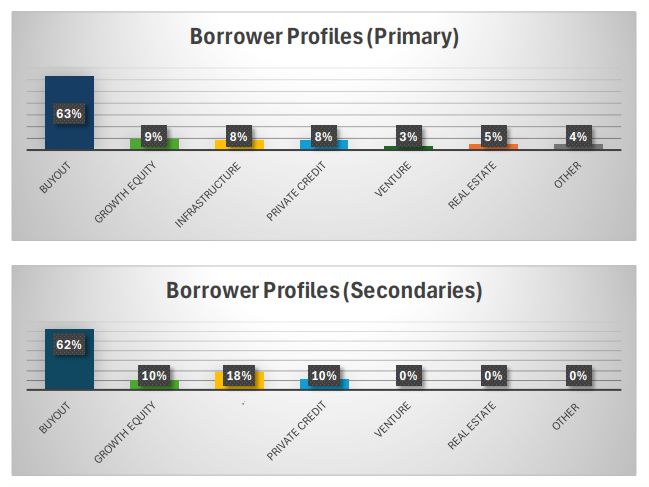
Fund Strategy
As expected, buyout funds represent the largest share of NAV borrowers. Outside of the secondaries market, NAV financing activity reflects a more diversified mix of borrower strategies, indicating broader acceptance of NAV facilities as a flexible liquidity and portfolio management tool across fund types.
Facility Size
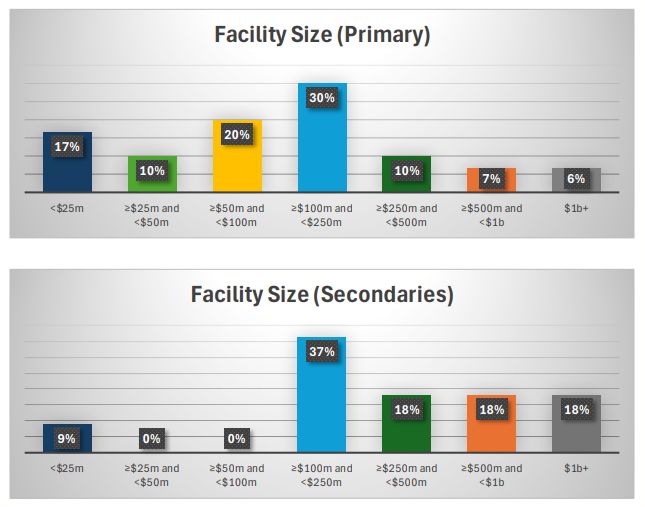
The survey results highlight a clear distinction between NAV facility sizes in the primary and secondaries market. In the primary market, facility sizes are more evenly distributed, with the most respondents reporting facilities in the $100 million to $250 million range, alongside continued use of smaller and mid-sized facilities. By contrast, secondaries facilities skew larger, with a significant portion of respondents reporting facilities in excess of $250 million, including a meaningful concentration at $500 million and above, reflecting the continued growth and increasing scale of secondaries transactions.
Types of NAV Facility
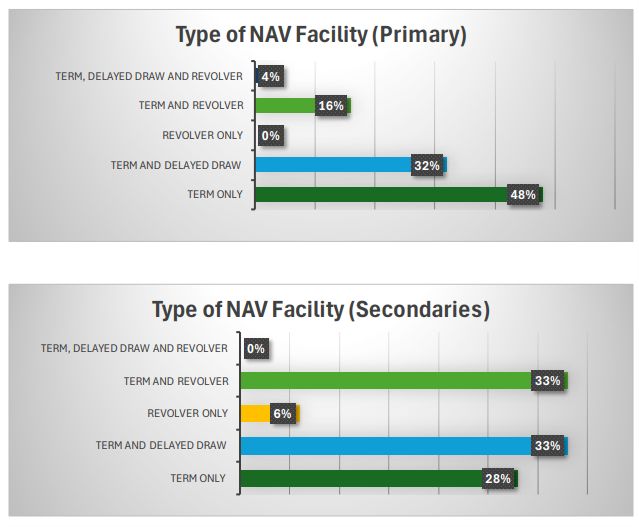
Respondents reported a mix of facility types, with term-only facilities and term facilities with delayed-draw features representing the largest shares, alongside more limited use of revolver structures. By contrast, in the secondaries market, respondents more frequently reported term facilities with delayed draw features and combined term and revolver facilities. Overall, the results reflect continued variation in facility structures, with lenders becoming more comfortable with the inclusion of a revolver in a NAV facility.
Lender Composition
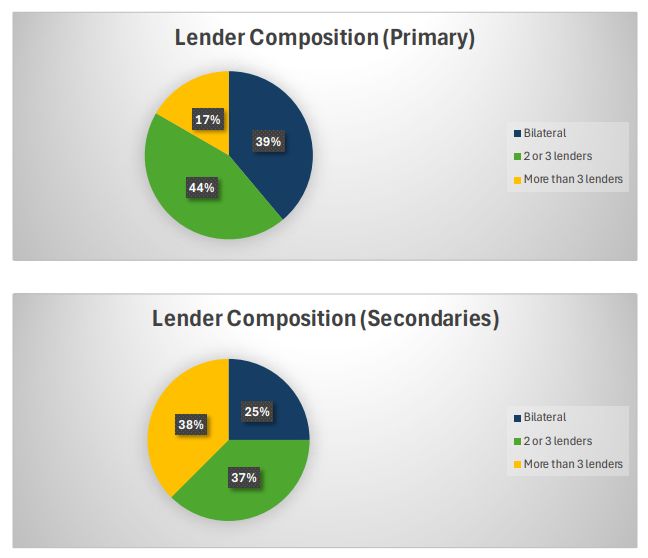
The survey results show meaningful differences in lender composition between the primary and secondaries NAV financing markets. Outside of the secondaries market, transactions are most commonly structured with two or three lenders, with bilateral facilities also representing a significant share, reflecting continued use of streamlined lending structures. By contrast, the secondaries market exhibits a greater prevalence of larger lender groups, with a substantial portion of respondents reporting transactions involving more than three lenders. This shift toward more broadly syndicated structures reflects the larger facility sizes and increased complexity commonly associated with secondaries transactions.
Purpose
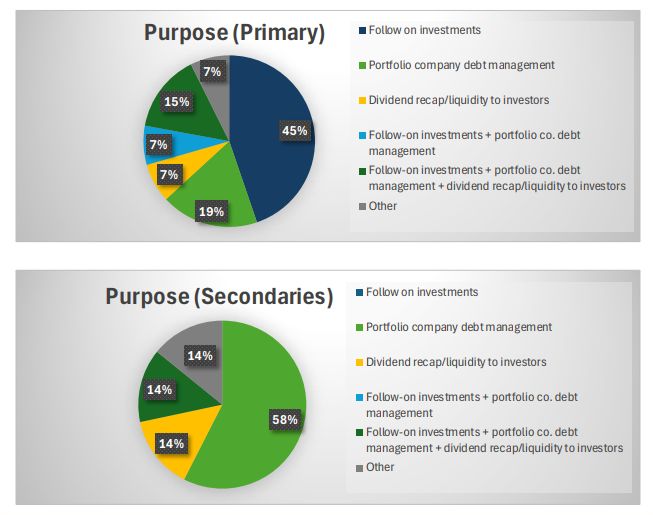
Follow-on investments are the most cited use of proceeds among primary facilities, with use for portfolio company debt management a distant second. Respondents also reported combined use cases, highlighting the flexibility and versatility of NAV facilities as a portfolio management tool. By contrast, secondaries facilities are predominantly used for portfolio acquisitions.
Credit Support / Collateral Package
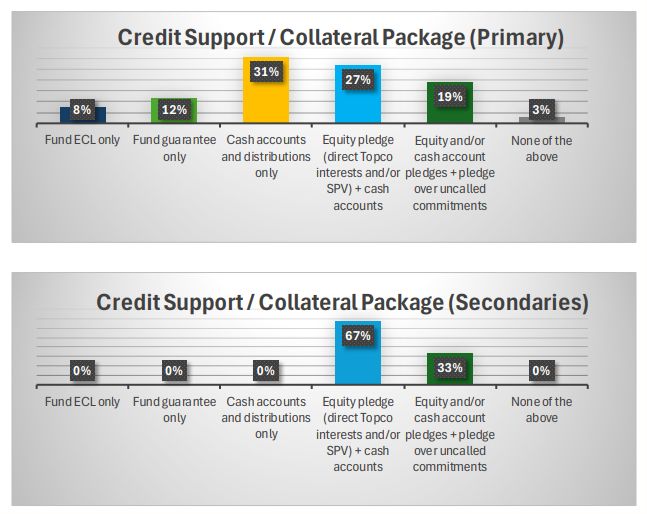
Respondents reported a range of credit support structures in the NAV financing market generally, most commonly including pledges over cash accounts and distributions, either on a standalone basis or in combination with equity pledges, and, in some cases, pledges over uncalled capital commitments. In the secondaries market, respondents more frequently reported equity pledges at the Topco or SPV level together with pledges over cash accounts, often accompanied by additional collateral.
To read this article in full, please click here.
Insights on the NAV Financing Market - Full Year 2025
The content of this article is intended to provide a general guide to the subject matter. Specialist advice should be sought about your specific circumstances.


