

Australia’s workforce shortages are often discussed as a local problem. Not enough workers. Too many vacancies. Too much pressure on employers. That is only part of the picture.
The latest International Labour Market Update from Jobs and Skills Australia shows a broader global trend. Labour markets are softening in many advanced economies.
Vacancy growth has eased in countries such as Canada, the United Kingdom and the United States. Unemployment remains relatively low across much of the OECD (The Organisation for Economic Development and Cooperation), but the pressure is shifting.
Australia sits in a different position.
The report shows indexed job vacancies declined in most selected economies through 2025 and into 2026. Australia was the exception.
Figure 1: Indexed job vacancies for selected countries, March quarter 2016 to March quarter
2026, indexed to March quarter 2016
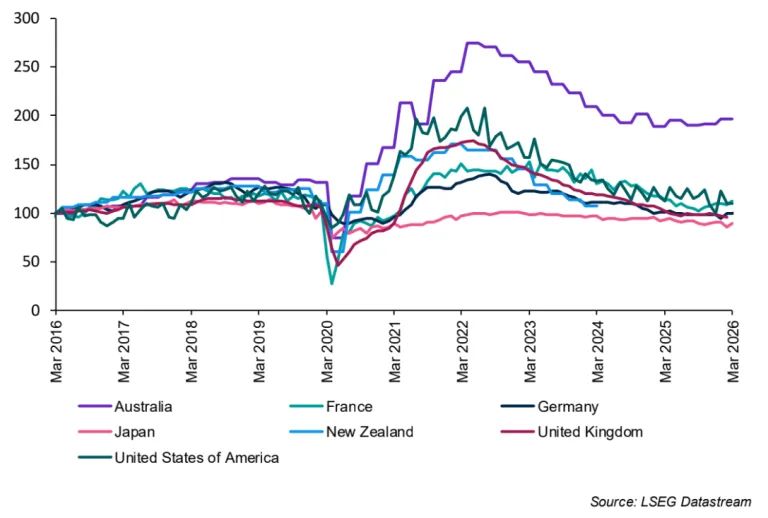
That tells us Australia is not simply dealing with a short-term hiring problem. It is dealing with a structural workforce problem. A cooling global market does not solve Australia’s skills shortage.
There is a risk in reading international labour market data too narrowly. If vacancies are falling overseas, employers might assume the pressure is easing everywhere. That would be the wrong conclusion for Australia.
Australian employers are still competing for skilled workers in sectors where local pipelines are thin, slow or misaligned with demand. Healthcare, aged care, construction, engineering, education, defence, technology and professional services are all still dealing with workforce planning pressure.
Some of these shortages are not new. They have been building for years.
Training more Australians is part of the answer, but it is not a quick answer. A nurse, engineer, teacher, software specialist or construction professional does not appear in the labour market overnight.
Employers need a workforce strategy that deals with the labour market they are in now, not the one they hope will exist in the coming years.
Migration is part of workforce planning
Skilled migration is often treated as a backup option. Employers try local recruitment first, wait until the role becomes urgent, then look at sponsorship. That approach creates unnecessary pressure.
Visa strategy should sit inside workforce planning from the start. If a business knows it will need certain skills over the next 6 to 12 months, it should already be asking:
- Which roles are likely to remain hard to fill locally?
- Which current employees have visa expiries approaching?
- Which sponsored workers are critical to business continuity?
- Which roles have a realistic pathway to permanent residence?
- Are salary settings aligned with sponsorship requirements?
- Are managers aware of visa conditions and work rights limits?
The businesses that handle migration well are usually the ones that plan early. They know where their workforce pressure points are. They understand which roles need sponsorship. They track visa dates properly. They do not leave immigration decisions until recruitment has already failed.
AI is changing the skills conversation
The report also points to the growing impact of artificial intelligence on employment and productivity.
In the United States, slower employment growth has been linked with stronger productivity growth, supported by investment in labour-saving technologies, including AI. The report also refers to countries preparing workers for emerging AI-related skills.
For employers, this creates a second layer of pressure.
AI will not remove the need for skilled workers. It will change the type of skills businesses need.
Some roles will become more technical. Some will require stronger digital capability. Some will blend operational experience with data, automation and compliance knowledge. That shift will affect recruitment, training and migration strategy.
Employers should be reviewing whether their sponsored roles still reflect the work being done. Job titles, duties, salary levels and business needs need to line up. As roles change, the immigration strategy attached to those roles also needs to be reviewed.
This is where poor planning creates problems. A role evolves, but the visa strategy does not. The business then discovers the issue at renewal, nomination or audit stage.
Australia’s productivity problem is also a workforce problem
Figure 2: Productivity growth for selected countries (yearly change in output per worker),
March quarter 2023 to March quarter 2026
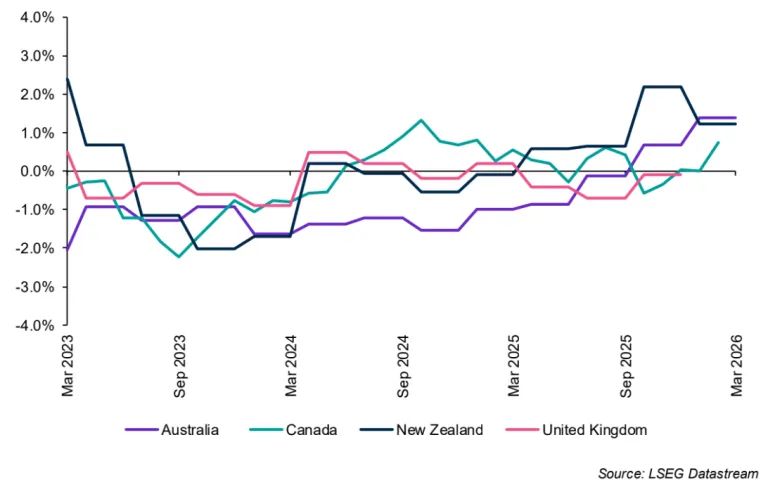
Australia recorded positive productivity growth in the report, but productivity is still a major policy and business concern. Productivity is often discussed as if it sits separately from migration. It does not.
A business cannot lift productivity if it cannot get the people it needs. It cannot improve systems if key roles remain vacant. It cannot scale if workforce gaps keep pulling managers back into crisis hiring. Migration does not replace productivity reform. It supports it.
The best employers use migration to support long-term capability. They bring in skills they cannot source locally. They retain workers already trained in their systems. They build permanent pathways where the business need is genuine. They keep compliance under control so workforce mobility does not become a governance problem.
That is a more mature way to look at skilled migration.
Not as a paperwork exercise. Not as a last-minute recruitment fix. As part of the business’s operating model.
Salary pressure still needs careful handling
The report also notes that wage and labour cost trends remain uneven across advanced economies. For Australian employers, salary settings remain a practical issue in sponsorship.
A role might be hard to fill. The candidate might be excellent. The business might want to move quickly. But the salary still needs to be assessed properly against the relevant migration requirements and market position. This is where employers need to be careful.
Immigration strategy should not be separated from remuneration planning. If salary settings are too low, the visa pathway might fail. If the role description does not reflect the actual duties, the nomination might create risk. If internal salary structures are inconsistent, the business might create broader workforce issues. Speed is useful. Clean strategy is better.
What employers should take from the global data
The global labour market is shifting, but Australia’s workforce shortages have not disappeared.
For employers, the takeaways are:
- Plan earlier for hard-to-fill roles.
- Treat migration as part of workforce strategy.
- Review current visa holders before expiry pressure starts.
- Check whether sponsored roles still match current duties.
- Align salary settings with business needs and visa requirements.
- Keep work rights, visa conditions and sponsorship obligations visible.
- Build retention plans for critical sponsored workers.
The employers who wait will keep feeling the same pressure. Urgent vacancies. Delayed starts. Salary issues. Visa deadlines. Compliance risk. The employers who plan early will have more options.
Where employers need to focus
Australia’s workforce shortages are not isolated from global labour trends. But they are not solved by them either. A softer labour market overseas does not automatically give Australian employers access to the skills they need.
For many organisations, skilled migration will remain a necessary part of workforce planning. The question is whether it is managed strategically or left until the business is already under pressure.
Roam Migration Law works with employers to build immigration strategies that support workforce planning, compliance and long-term business needs.
The content of this article is intended to provide a general guide to the subject matter. Specialist advice should be sought about your specific circumstances.
[View Source]