

- within Employment and HR topic(s)
- with readers working within the Construction & Engineering industries
- within Real Estate and Construction topic(s)
For anyone paying attention since the pandemic, unions have enjoyed a renaissance of sorts since 2021. They saw historic numbers in terms of election petitions being filed with the National Labor Relations (NLRB), and dominated headlines.
From Starbucks, Trader Joe's, and other big name companies being targeted for unionizations to the "Big 3" auto strikes, media attention has been in abundant supply.
Is organized labor starting to face some headwinds? Maybe. A recent report (Unionizing Set to Fall Due to Economic, Political Headwinds) from Bloomberg Law notes the following:
"The number of union elections fell to 1,372 last year, down from 1,938 in 2024. That's the fewest elections since 2021, a review of National Labor Relations Board data found. Union wins also sank by nearly 27% in 2025 compared to 2024, the first downturn since 2020. That drop in election wins led to the number of new workers organized via NLRB elections to fall nearly 40% year-over-over to just 65,542 workers in 2025, according to the data."
It also broke it down in this chart:
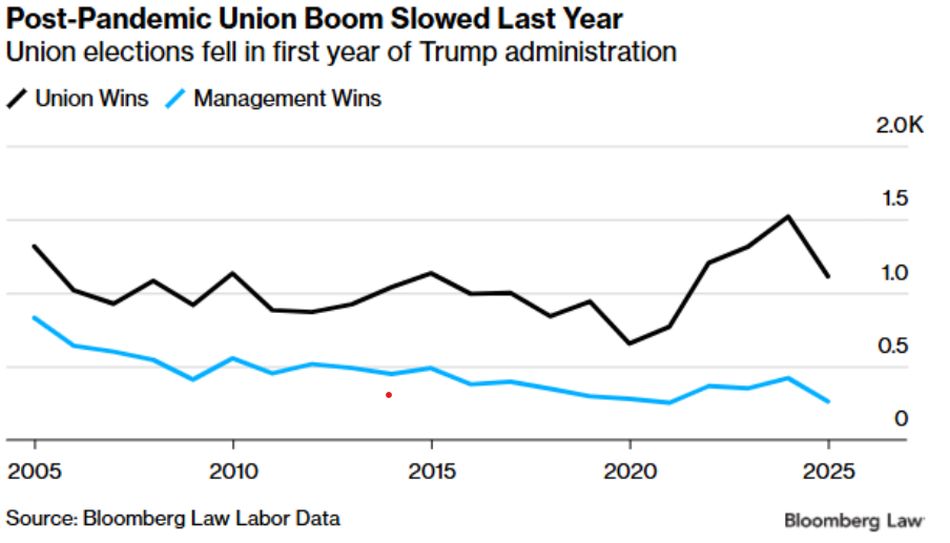
While unions did enjoy media attention and a surge in election petitions, their numbers overall actually continued to decline in the private sector, falling below 6% for the first time.
It will be interesting to monitor this in the coming months and years, as the labor law landscape may be poised to change given the new quorum at the NLRB. We'll see how this plays out and whether declining election petitions translate into even lower union density numbers. Stay tuned.
The content of this article is intended to provide a general guide to the subject matter. Specialist advice should be sought about your specific circumstances.
