

INTRODUCTION TO IP LICENSING IN ENTERTAINMENT
Intellectual Property (IP) licensing is critical in the entertainment industry. It allows creators to legally exploit their work through licensing agreements with third parties.
Notable disputes
- Music industry royalty battles (e.g., disputes over sampling).
- Film studio and screenwriter clashes on rights ownership.
- Litigation over unauthorized adaptations, such as remakes of foreign films, local adaptation of foreign shows etc.
Recent trends
- Increased streaming services acquiring exclusive licenses.
- Cross-industry collaborations (e.g., gaming and music).
- Rise of licensing for digital goods and NFTs.
Key issues arising
- Determining the scope and term of licensing agreements.
- Negotiating royalty rates and revenue splits.
- Managing territorial rights across multiple jurisdictions.
Commonly Licensed IP Rights
Trademarks, patents, and copyrights are essential in the entertainment industry to protect creative works, innovations, and branding. They enable creators and businesses to monetize intellectual property through licensing, merchandising, and exclusive rights.
1 Trademarks
Trademarks protect distinctive signs, symbols, or logos that identify the source of goods or services. In entertainment, trademarks are used to protect titles, character names, and logos associated with films, TV shows, and video games.
2 Copyrights
Copyright protects original works of authorship, such as music, films, scripts, and literary works. It grants creators exclusive rights to reproduce, distribute, perform, and display their work.
3 Patents
While less common in entertainment, patents protect inventions and innovative technologies. They can be used to protect unique filming techniques, special effects, or gaming technologies.
Works with frequent licensing of IP Rights
Films & Audiovisual Works
Licensing enables producers to use existing literary works, characters, or music in their films and skits. Rights are licensed to streaming platforms, cinemas, and broadcasters for revenue generation. Associated rights, like characters or logos, can be licensed for merchandise or spin-offs.
Advertisements & Campagins
Licensing of music and sound effects for integration in advertising campaigns. Celebrity likenesses, trademarks, or branded content are licensed for endorsements. Some campaigns license IP exclusively to prevent competitors from using the same assets.
Music, Shows and Ochestra
Licenses are required for public performances or broadcasts of music. Music is licensed for use in audiovisual productions like films, ads, or TV shows. Licensing also allows for the reproduction and distribution of music on physical or digital formats
Video Games and Toys
Popular characters or franchises are licensed to video game developers or toy manufacturers. Music tracks and sound effects are licensed to enhance gaming experiences. Video game IPs are often extended to toys, apparel, and collectibles through licensing deals.
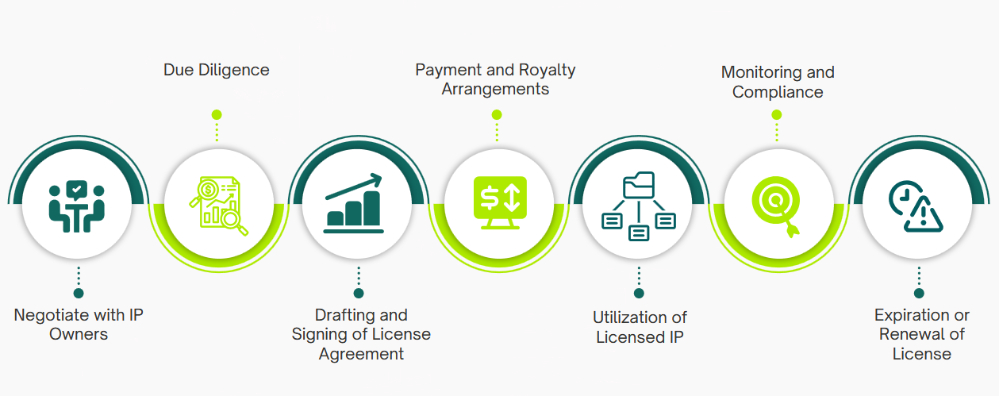
IP LICENSING LIFECYCLE
IP licensing is a strategic process that involves negotiating, drafting, and managing agreements to grant permission for others to use intellectual property. This 7-stage lifecycle guides businesses through the entire process, from initial negotiations to the expiration of the license.
The content of this article is intended to provide a general guide to the subject matter. Specialist advice should be sought about your specific circumstances.
[View Source]